COTABATO CITY (MindaNews/27 March) — The Bangsamoro region is commemorating today the 12th anniversary of the signing of the Comprehensive Agreement on the Bangsamoro (CAB), a day marked by both the celebration of a turning point and a stark warning that the peace process is currently a ‘dance for two’ with only one partner on the floor.
BARMM Chief Minister Abdulraof “Sammy Gambar” Macacua described the CAB as a definitive shift in history born from generations of struggle.
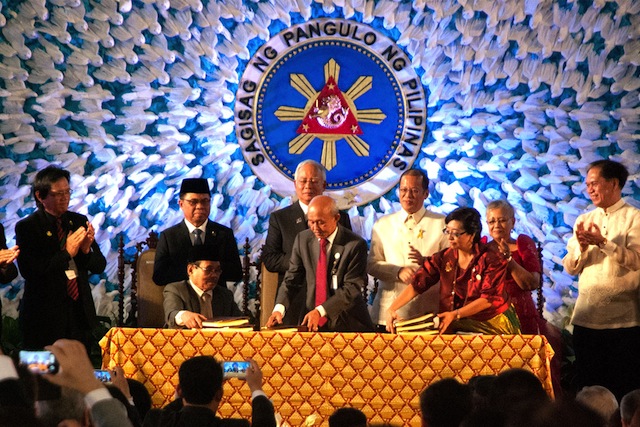
Macacua said the peace deal must now evolve from a signed document into tangible service, saying that peace must be seen in how the government serves and must be felt in terms of safer communities, of families rising again, and in terms of former combatants living with dignity.
Macacua was candid about what remains to be done and the remaining hurdles remaining, urging all sides to ensure the faithful and simultaneous fulfillment of all commitments.
He framed the upcoming September 14, 2026, Parliamentary Elections as the critical step to solidifying the promises of the CAB, vowing that the regional government would remain a ‘stronger Bangsamoro’ that honors the legacy and sacrifice of its martyrs.
In a more somber tone, MILF Chairman Al Haj Murad Ebrahim expressed deep regret over the current state of the peace architecture.
In an official statement, the MILF had declared a ‘temporary pause’ in several key engagements with the National Government due to a leadership vacuum. The MILF’s frustration stems from the recent resignation of Ret. Gen. Cesar B. Yano as Chairman of the GPH Peace Implementing Panel, which the MILF says has left a “gap[ing] hole” in the implementation.
Murad said the MILF Peace Implementing Panel now stands alone in a dance that was meant for two, noting that the group finds itself unable to proceed with substantive engagements because it cannot negotiate with a ‘headless’ counterpart.
The pause, Murad said, is necessary to protect the CAB’s requirement for procedural integrity and mutuality. He also cautioned against the government’s move to shift peace roles to broader offices like the OPAPRU, insisting the formal Peace Panels remain the central decision-makers. Despite this pause, the MILF assured the public that security mechanisms such as the Coordinating Committee on the Cessation of Hostilities (CCCH) and the Ad Hoc Joint Action Group (AHJAG) will continue to function to protect the fragile peace on the ground.
The Third Party Monitoring Team (TPMT), the independent body tasked with overseeing the deal, echoed these concerns by describing the peace process as being at a “very sensitive juncture.”
The monitors called for a return to “parity of esteem” and mutual respect to resolve pending issues through meaningful dialogue, noting that trust is at an all-time low. Like Chief Minister Macacua, the TPMT identified the September 2026 elections as the ultimate test of meaningful self-governance and a vital democratic milestone for the region.
Adding to the call for unity, MP Susana Salvador Anayatin of the Office for Settler Communities (OSC), highlighted the CAB as a blueprint for inclusivity. She noted that the agreement serves as the cornerstone for a region where Moros, Indigenous Peoples, and settlers can finally build a shared future together, honoring the courage of the original negotiators.
The consensus among all sources—from the MILF leadership to international monitors—is that the prompt designation of a new GPH Panel Chair and the success of the 2026 elections are the only ways to ensure the dance of peace continues to its final act. (Ferdinandh B. Cabrera/MindaNews)


0 Comments